 wilson
Splitting a wedding across two venues solves a real problem. You get the ceremony somewhere that means something — a church, a register office, a family garden, a small historic room — without being tied to whatever that place can offer for a hundred and twenty people at eleven at night. And you get an evening party in a space actually built for one, rather than a marquee with a hired dance floor and a temporary bar.
The trade-off is that you’ve introduced a gap. Everything that goes wrong with two-venue weddings goes wrong in that gap.
It’s an entirely manageable problem, but it needs planning as a thing in its own right rather than as an afterthought between two bookings.
Work out the gap before you book anything
The moment you have two candidate venues, calculate the honest travel time between them — not the optimistic one. Add time for a hundred people to leave a building, find their cars, park at the other end and walk in. A ten-minute drive is a thirty-five-minute movement for a wedding party.
Then decide what happens to that time. There are three workable approaches.
Keep it tight. Ceremony ends, everyone moves, drinks reception starts. This works when the venues are genuinely close, and it keeps momentum. The risk is that any delay in the ceremony compresses everything after it.
Build in a deliberate break. Two or three hours where guests go back to hotels, change, take children somewhere, and reconvene. This suits weddings where guests are staying locally and where the evening is a distinctly different event from the day. It only works if you tell people clearly, well in advance, that this is the plan.
Fill it properly. A drinks reception, photographs, a meal — all at the second venue rather than the first. This is often the cleanest option, because it means only one movement rather than two.
What doesn’t work is an accidental gap of ninety minutes that nobody planned for. Guests end up in a pub car park in their good shoes, and a proportion of them never make it to the second venue at all.
The drop-off problem
Here’s the thing nobody warns couples about: guest numbers fall between venues. Some of that is fine and expected — day guests who were only invited to the ceremony, elderly relatives, families with small children. But some of it is people who intended to come and got lost, or couldn’t park, or went home to change and didn’t come back.
You can reduce it considerably:
- Put the second venue’s address, postcode and parking information on the invitation, the order of service and a sign at the exit of the first venue
- Give a clear time for when the evening starts, and stick to it
- Arrange transport if the venues aren’t walkable — a coach or minibus is a modest cost and dramatically improves attendance
- Choose a second venue that’s easy to reach independently, near a station or with straightforward parking, so anyone who misses the coach can still get there
- Ask a couple of reliable people to be the last out of venue one and the first into venue two
If you’re catering the evening based on numbers, this matters financially as well as socially.
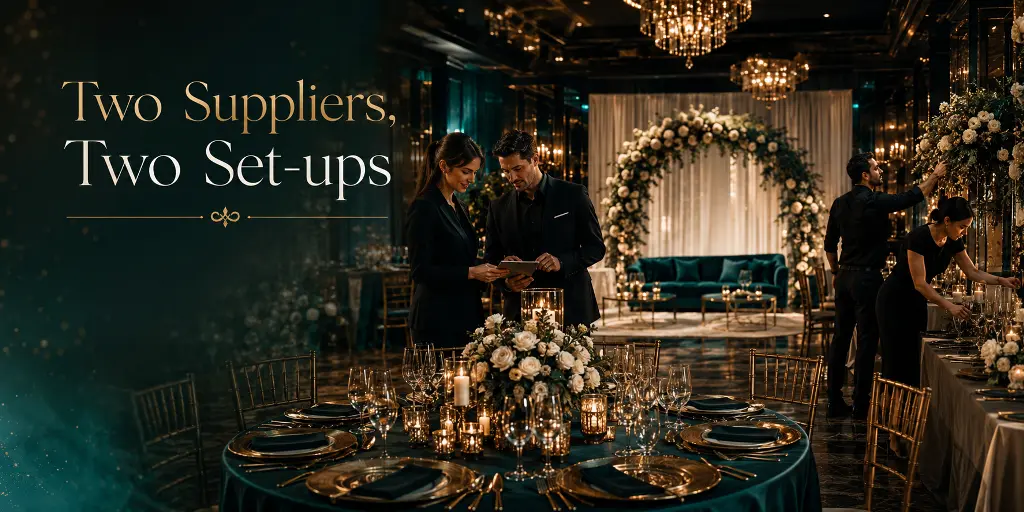
Two suppliers, two set-ups
Every supplier now has a logistical question attached.
Photographer. Do they travel with you, and are they photographing the movement itself? Agree the finish time at each location. Travel time is billable time for most photographers, so confirm how it’s charged.
Flowers and decorations. Can arrangements be moved from the first Luton venue hire to the second, and who is physically doing that? Somebody has to lift them into a car during the gap. Name that person at the planning stage. Some couples find it cheaper and far less stressful to have separate, simpler arrangements at each location than to move one elaborate set-up.
Cake. If it’s being cut in the evening, it needs to be at the second venue and it needs a table and a knife. Confirm with the second venue that they’ll store it.
Music. The evening venue’s own sound and lighting is usually better than anything you’d bring in, so use it. Check what’s included, what a DJ would cost through them, and how a playlist connects if you’re supplying your own.
Access times. This is the one that catches people. Ask the evening venue when you can get in to set up. If it’s an hour before guests arrive and you have decorations to hang, you have a problem — so find out early and appoint someone whose only job that afternoon is to be at venue two.
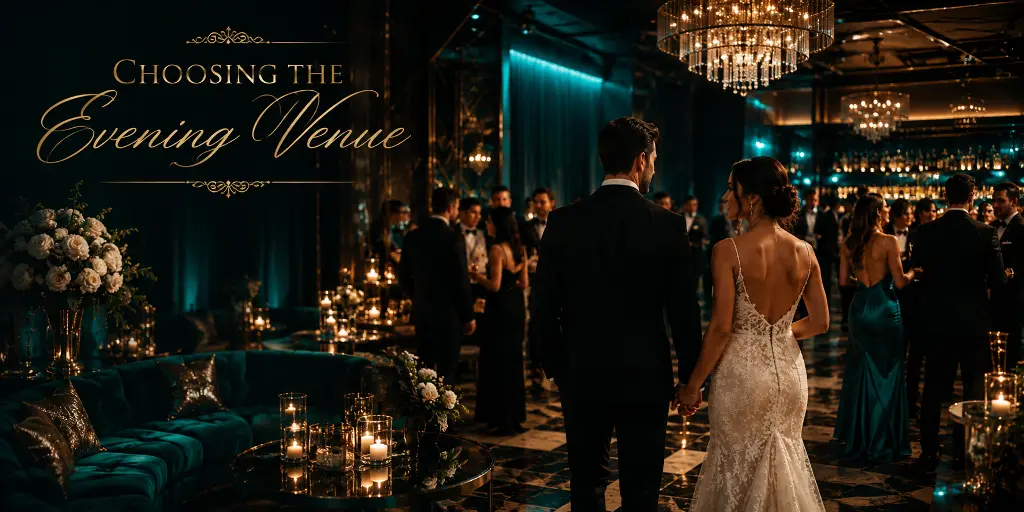
Choosing the evening venue
The second venue is doing a different job from the first, and should be chosen on different criteria. The ceremony venue was chosen for meaning and for how it looks. The evening venue is chosen for how well it holds a party.
Things that matter more than they seem:
Whether the room works when it’s not full. Numbers drop in the evening. A space that looks magnificent with a hundred and fifty people in it can feel bleak with sixty. Ask how the room is arranged for smaller numbers, and whether there’s a way to close part of it off.
Where people go who don’t want to dance. Every wedding has a substantial contingent who want to sit and talk. If the only options are the dance floor or outside, they’ll leave early.
Sound and lighting that’s already there. A venue built for evening events has this. A room hired for the night usually doesn’t, and hiring it in costs more than you’d think.
Late licence and finish time. Confirm the actual time the music stops and the time everyone must be out. These are different times, and both should be in writing.
How guests get home. This is the practical argument for a town centre evening venue. If people can walk to a hotel, get a taxi easily or reach a station, you’ve removed the single biggest headache of a late finish.
Whether it’s exclusively yours. A private room in a busy venue and the whole venue to yourselves are different products at different prices. Ask which you’re getting.
The running order
Two-venue weddings live or die on a written timeline that everyone has.
Work backwards from when the music has to stop. Set the evening start time, then add the movement, then the ceremony finish. Build in a buffer of at least twenty minutes somewhere in the middle, because ceremonies overrun and photographs always take longer than the schedule says.
Give a copy to both venues, every supplier, and two or three people in the wedding party who can chase things without you having to. On the day, you should not be the person phoning the DJ.
Frequently asked questions
How far apart can two wedding venues realistically be?
Under twenty minutes’ travel is comfortable. Beyond about thirty-five to forty, you’ll lose guests and the day starts to feel disjointed, unless you’re deliberately building in a long break.
Should we arrange transport between venues?
If the venues aren’t walkable, yes. A coach or minibus costs less than most couples expect and noticeably improves how many people arrive at the evening.
How many guests typically come to the evening?
It varies enormously by wedding, so ask your evening venue what they’ve seen and plan catering conservatively. Clear directions and organised transport make more difference than anything else.
Is a two-venue wedding more expensive?
Not necessarily. You’re often paying less for the ceremony space and getting better facilities in the evening than a single venue could provide. The additional costs are transport, supplier travel and possibly duplicated decoration.
The short version: calculate the real gap, decide deliberately what fills it, make the second venue easy to find and easy to leave, get access times in writing, and give everyone a written timeline.
If you’re looking at evening venues in Bedfordshire, After Dark is a wedding reception venue in Luton in the town centre with its own sound and lighting, a short walk from the station, and the team can arrange a viewing so you can see how the space works for your numbers.
Written by the team at After Dark Nightclub , a nightclub and private venue for hire on Upper George Street in central Luton, hosting evening receptions, private celebrations and corporate events.